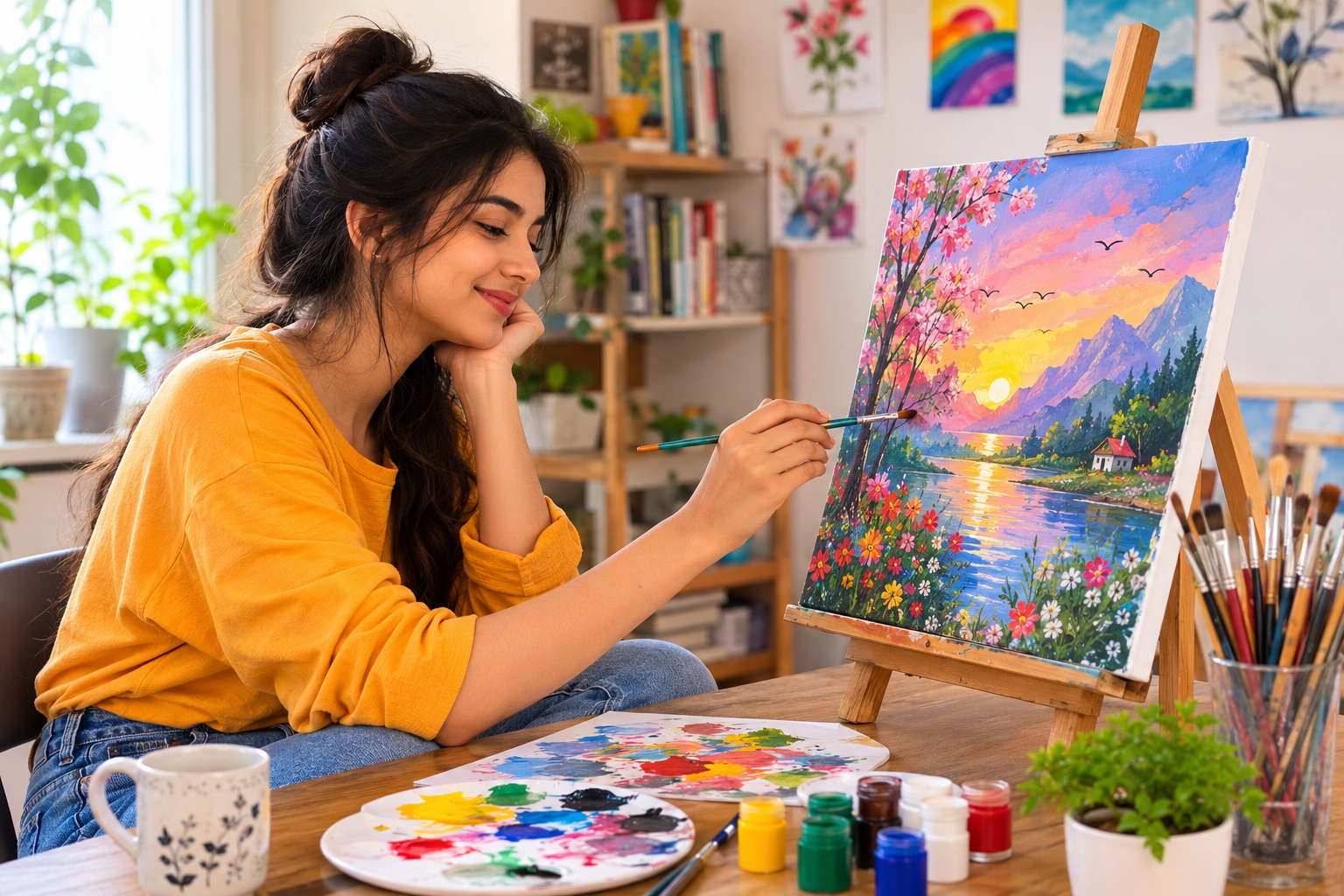
Painting is more than a creative activity that produces beautiful pictures. It can also be a simple and enjoyable hobby that supports mental and emotional health. Many people choose painting because they want to express themselves, relax after a busy day, or spend their free time doing something meaningful. You do not need to be a professional artist to enjoy the benefits of painting. Even simple drawings, colorful patterns, or basic brush strokes can make a positive difference in your daily life.
In a busy world filled with responsibilities, screens, work pressure, and personal challenges, finding a healthy hobby can be important for emotional wellbeing. Painting gives the mind a chance to slow down and focus on the present moment. It can create a peaceful space where you can explore your thoughts and feelings without worrying about perfection.
Painting Can Help Reduce Stress
One of the most noticeable benefits of painting for mental health is its ability to support relaxation. When you paint, your attention often moves away from stressful thoughts and focuses on colors, shapes, lines, and movements. This change in attention can help you feel calmer.
Painting can become a relaxing routine after work, school, or other daily responsibilities. Sitting quietly with a canvas and choosing colors can give your mind a break from constant thinking. Even spending twenty or thirty minutes painting can make your day feel more balanced.
Creative activities such as painting may also encourage slow and focused breathing. When you become deeply involved in an artistic activity, you may naturally become less focused on outside distractions. This can make painting a useful hobby for people who want to manage everyday stress in a healthy way.
Painting Supports Emotional Expression
Sometimes people have feelings that are difficult to explain with words. Painting provides another way to express emotions. Colors, shapes, textures, and images can communicate feelings that may be difficult to describe in a conversation.
For example, someone may choose bright colors when feeling happy and peaceful colors when looking for relaxation. Another person may create dark or dramatic artwork while dealing with difficult emotions. There is no single correct way to express feelings through painting.
This freedom can make painting emotionally valuable. You do not have to explain your artwork to anyone. You can simply allow your feelings to appear on the canvas. The process itself can provide a sense of emotional release and personal understanding.
Painting Encourages Mindfulness
Mindfulness means paying attention to the present moment instead of constantly thinking about the past or worrying about the future. Painting can naturally encourage this type of attention.
When you concentrate on a brush moving across paper or canvas, you become more aware of what you are doing right now. You may notice the texture of the paint, the combination of colors, and the small details of your artwork.
This focused attention can give your mind a break from unnecessary thoughts. Instead of thinking about everything that needs to be done, you can focus on one simple activity. Over time, painting can become a peaceful mindfulness practice that supports emotional balance.
Painting Can Improve Mood
Creative hobbies can add enjoyment and satisfaction to everyday life. Painting gives people an opportunity to do something simply because they enjoy it. This can be especially valuable when daily routines become repetitive.
Completing a painting can also create a feeling of achievement. Even if the artwork is not perfect, finishing something you started can make you feel proud. Small achievements like these can contribute to a more positive outlook.
Painting can also introduce fun and curiosity into your routine. Experimenting with new colors and techniques can make each session different. You may discover that you enjoy a particular style or subject that you had never tried before.
Painting Builds Self Confidence
You do not need expensive materials or advanced skills to start painting. As you continue practicing, you may notice improvements in your ability to create shapes, mix colors, and develop ideas. Seeing this progress can increase your confidence.
Painting teaches an important lesson about practice. Your first painting may not look the way you imagined, but this does not mean you should stop. With time, patience, and experimentation, your skills can improve.
This experience can also change the way you think about mistakes. In painting, a mistake can sometimes become part of the artwork. Learning to accept imperfections may help you become less critical of yourself.
Painting Provides a Healthy Break From Screens
Modern life involves spending a large amount of time using phones, computers, and other digital devices. While technology is useful, too much screen time can make people feel mentally tired.
Painting provides an opportunity to step away from digital distractions. You can work with physical materials and enjoy an activity that does not require constant notifications or scrolling.
This screen free time can make your daily routine feel more balanced. Even a short painting session can give your eyes and mind a break from digital content.
Painting Helps Develop Patience
Good artwork often takes time. You may need to wait for paint to dry, add several layers, correct small details, or try a technique more than once. This process naturally teaches patience.
Instead of expecting immediate results, you learn to enjoy gradual progress. This can be a valuable skill beyond painting. Patience can help people deal with everyday challenges in a calmer and more thoughtful way.
Painting also reminds us that improvement does not happen overnight. Every session provides another opportunity to learn something new.
Painting Can Encourage Creativity
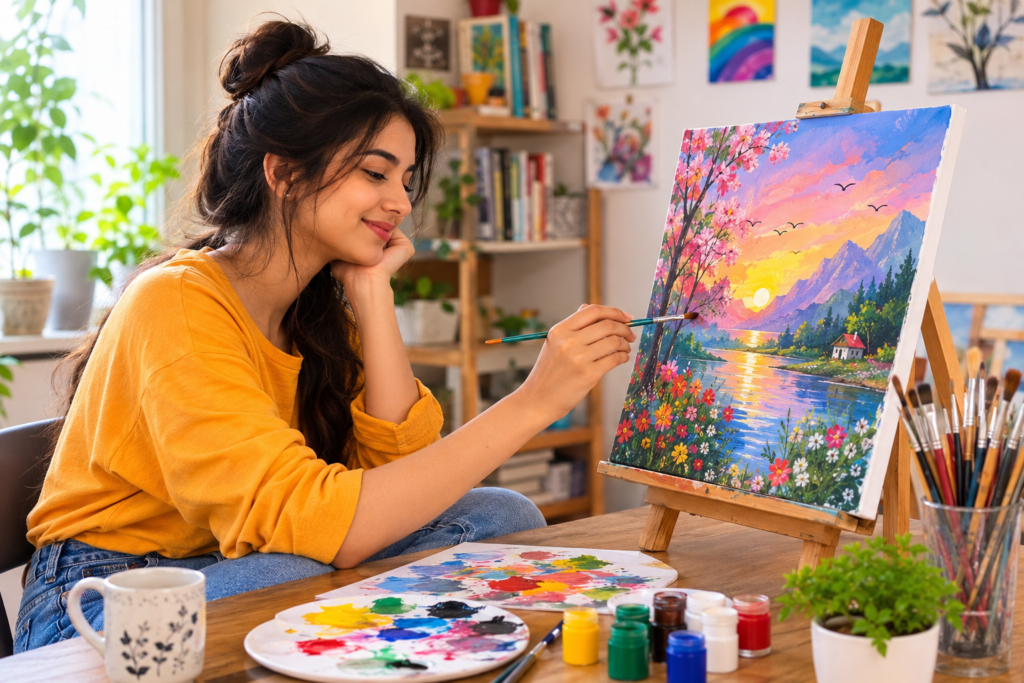
Creativity is not only useful for artists. It can help people solve problems, explore new ideas, and look at situations from different perspectives. Painting gives the brain a chance to experiment without strict rules.
You can choose unusual color combinations, create imaginary landscapes, or paint something based entirely on your imagination. There does not have to be one correct answer.
This freedom can help you become more comfortable with exploring ideas. Over time, creative thinking developed through painting may influence other areas of life.
Painting Can Be a Social Hobby
Although painting can be a peaceful activity to enjoy alone, it can also become a social hobby. People can join painting classes, art groups, workshops, or community activities. Sharing artwork with others can create opportunities to meet people with similar interests.
Learning with other people can also make painting more enjoyable. You can exchange ideas, learn new techniques, and encourage each other. Social interaction is an important part of emotional wellbeing, and creative hobbies can provide a natural way to connect with others.
Painting Can Help Create a Positive Routine
A healthy hobby becomes more beneficial when it becomes part of your regular lifestyle. Setting aside a small amount of time for painting can create a positive routine.
You might paint in the morning, during a quiet afternoon, or in the evening before going to bed. The goal is not to spend hours creating complicated artwork. Consistency is more important than the amount of time.
Having something enjoyable to look forward to can make your daily routine feel more meaningful. Painting can become a personal space where you can relax, think, and enjoy creativity.
Painting Does Not Require Artistic Perfection
One of the biggest barriers to starting painting is the belief that you need to be talented. In reality, painting can be enjoyed at every skill level.
You can begin with simple materials such as paper, pencils, watercolors, or basic paints. You can copy simple objects, paint nature scenes, create abstract designs, or experiment with colors.
The main purpose of painting as a healthy hobby is not to create perfect artwork. It is to enjoy the creative process and give yourself time to relax and express yourself.
How to Start Painting as a Healthy Hobby
Starting a painting hobby can be very simple. Choose a comfortable place where you can work without too many distractions. Collect a few basic supplies and select a subject that interests you.
Do not worry about creating a masterpiece. Start with simple shapes, flowers, landscapes, objects, or abstract patterns. Give yourself permission to experiment.
You can also follow beginner painting lessons if you want to learn specific techniques. However, there is no need to compare your progress with professional artists. Everyone develops at a different pace.
Conclusion
The benefits of painting for mental and emotional health make it a valuable hobby for people of many ages. Painting can help reduce everyday stress, support emotional expression, improve mood, encourage mindfulness, build confidence, and stimulate creativity.
It also provides a healthy break from screens and daily responsibilities. Whether you paint for ten minutes or spend an entire afternoon working on a canvas, the activity can give you valuable personal time.
You do not need professional skills to begin. What matters most is enjoying the process and giving yourself permission to create without worrying about perfection. By making painting a regular part of your routine, you can create a simple and enjoyable way to support your mental and emotional wellbeing.